
Craftiness is a funny thing and goes to the very heart of your personality: ultimately, it’s a question of taste…
One person’s gorgeous details is another person’s twee
One person’s minimalism is another person’s blank boredom
One person’s unique is another person’s inconsistent
I wrote my MA thesis on the subject of the market for craft purchasing in this country, based heavily on the Craft Council study into the same. I then went on to investigate the role and opportunities for Open Studios in central London on behalf of the creative industries organisation I was working for at the time.
The crux of the matter is: there is an audience for individualistic, story-based products that are local and/or sustainable and/or recycled and/or nostalgic.

However, in this age of ‘PriMarnis’ and Swedish flatpack, it’s inevitable that the market demands a particular price point, and the retailer demands a particular profit margin.

Of all this, I was aware.
What I had not anticipated was the market, and thus by extension, the retail outlet, judging the two products on a ‘like for like’ basis. I would not consider a kitchen crafted by hand by a local woodworker to be in any way comparable to one purchased from a nationwide, if not international, warehouse-based outlet. I’m not being a snob; it’s purely a matter of levels of engagement, levels of expectation and levels of quality, none of which, in that circumstance, to me, seem to be in any way on a par.

However.
However.
If you get one person sitting in their room making things.
If that one person is not working in a sweatshop.
If the things have provenance, nostalgia, narrative and individuality…
They should surely not be compared at face value with a machined, industrialised, blandly consistent product made in its thousands, if not millions.
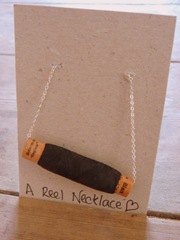 It’s a toughie, and I don’t think that craftspeople are entitled to special measures… A growing desire for the individual and personal (see the exponential continuing success of Not On The High Street for example) should, with any luck, exist alongside a recognition for, understanding of, and willingness to financially recognise, the disparity between these products.
Or am I being overly optimistic?
Thoughts??


 I’m sure you’re all avid followers of


 The Boy has bought me a yet-to-be-taken hot air balloon ride for my birthday and I coincidentally spotted the self-same company’s aircraft high above me this evening on my walk home.
  For now, I am able to see beautiful perspective from a distance of approximately ten minutes after an attack… One day, the CBT will nip it in the bud and I will be relaxed, engaged, interested and nonchalant…


